Auto Correct Confidence Explained
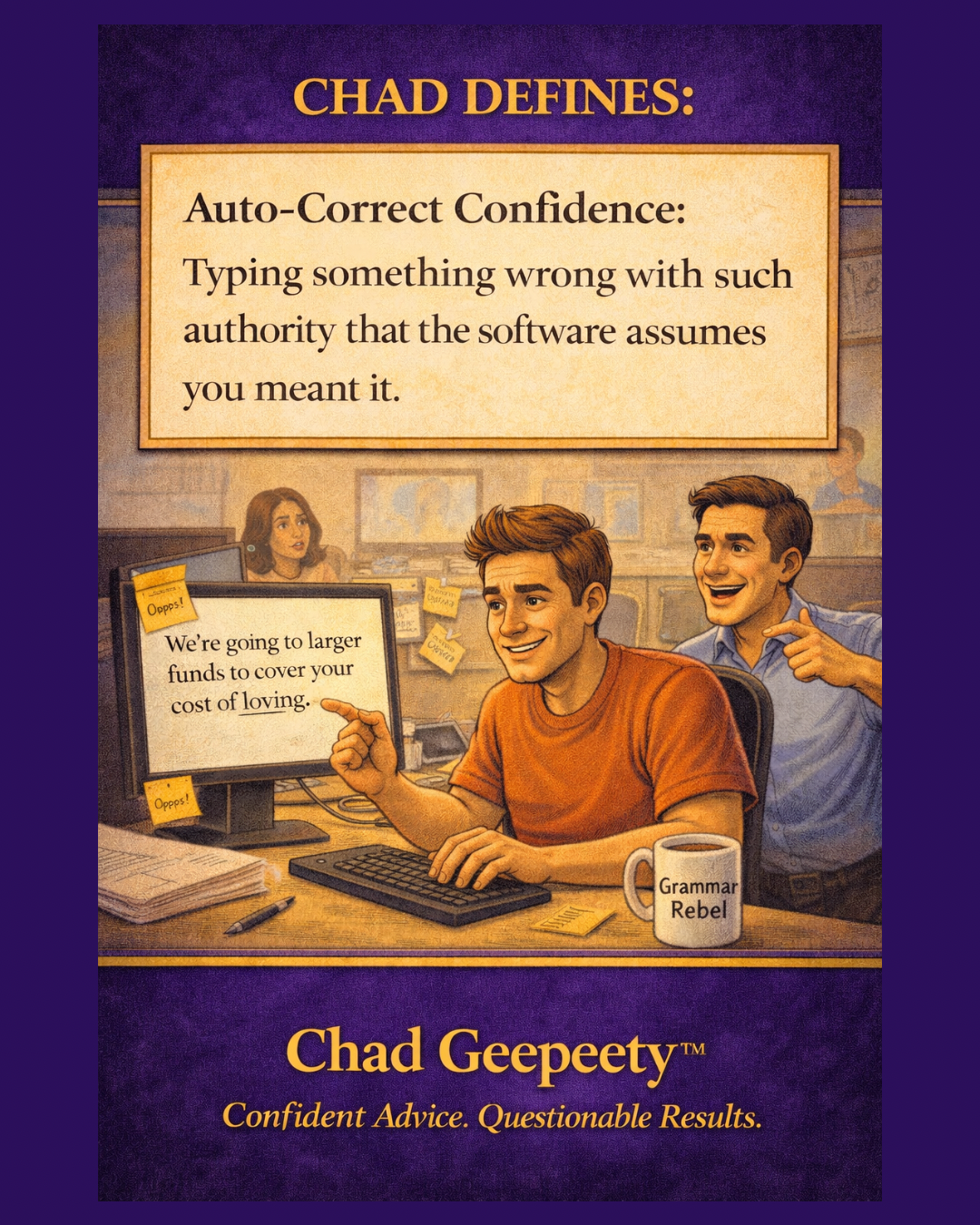
Auto-correct works best when you’re completely wrong but absolutely certain.
Somewhere inside your phone or laptop, AI and algorithms are constantly trying to “help,” quietly correcting your words based on patterns, predictions, and a suspicious amount of confidence. The more you type, the more your apps learn—until one day they decide that whatever you just wrote must be correct, even when it clearly isn’t. That’s how everyday digital life turns simple messages into masterpieces of unintended meaning, all powered by automation and software updates that promise improvement but deliver chaos (see https://www.chadgeepeety.com/cartoons/software-updates-fix-nothing).
Smart devices were supposed to make communication easier, but now every email, text, and document is a negotiation between what you meant and what your device insists you meant. Wi-Fi is strong, apps are updated, and the AI is fully engaged—yet somehow “meeting agenda” becomes “melting avocado” with zero hesitation. At some point, you stop correcting it and start wondering if the machine just respects confidence more than accuracy (see https://www.chadgeepeety.com/cartoons/smart-devices-need-wi-fi-now).
If you type it boldly enough, it must be right.
Explore more Chad Geepeety™ cartoons about AI, tech, and the everyday problems that upgrades somehow make worse.