Autocorrect Changes What You Meant
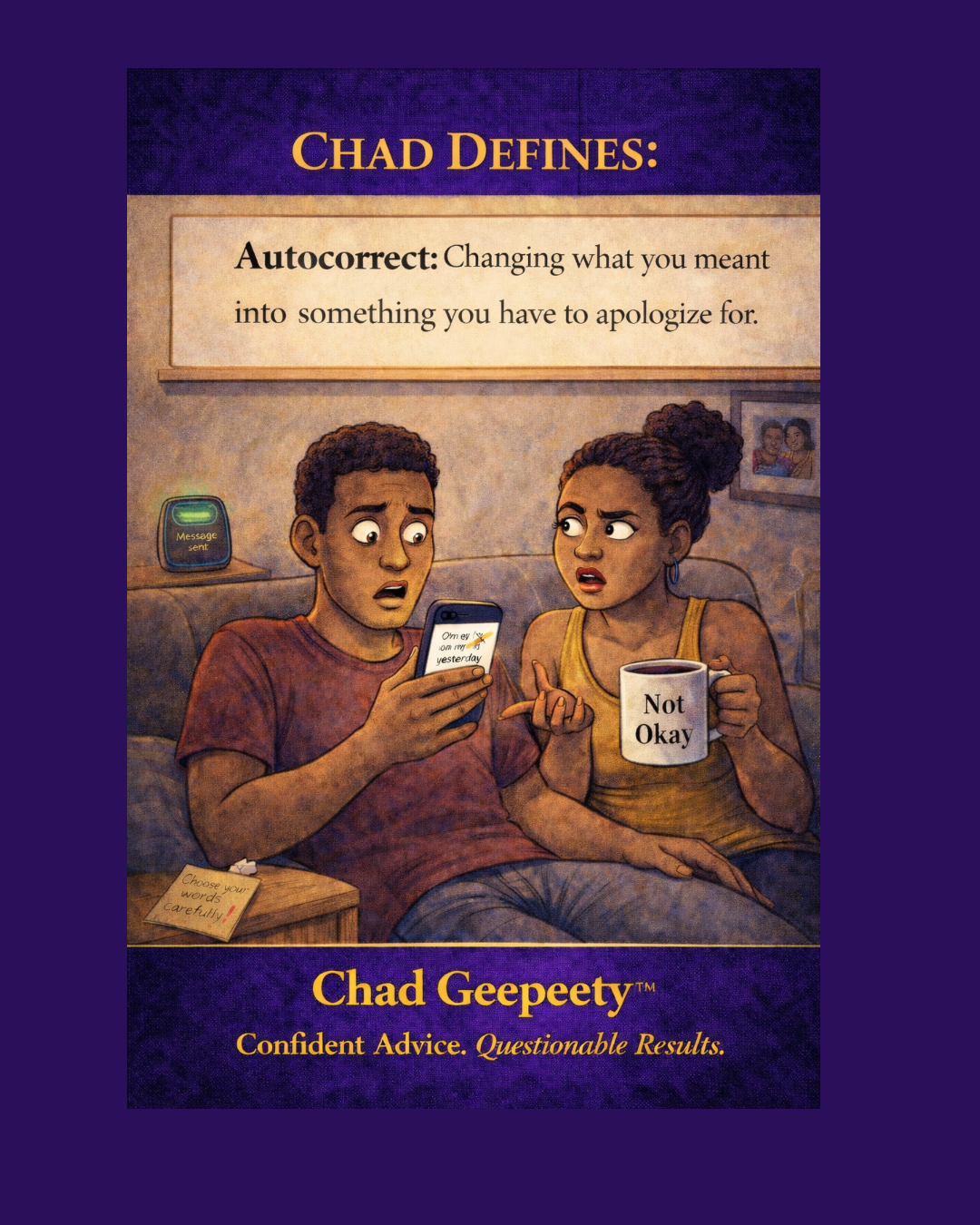
Two people look at a phone with a confused reaction as autocorrect changes a message, illustrating how text is rewritten incorrectly.
Autocorrect doesn’t fix your message—it replaces it with something more confident.
What started as a helpful feature has quietly become one of the most unpredictable parts of digital communication. Autocorrect, predictive text, and AI-driven typing tools are supposed to improve accuracy, but they often rewrite your intent entirely. One second you’re sending a simple message, the next you’re explaining why your phone just volunteered information you never approved. It’s automation stepping in with confidence, even when it’s completely wrong. This is the same kind of helpful chaos behind why smart devices suddenly need constant updates just to function (see Smart Devices Need Wi-Fi Now — https://www.chadgeepeety.com/cartoons/smart-devices-wifi-updates-cartoon).
Modern apps rely on algorithms trained to predict behavior, but prediction isn’t understanding. Your phone doesn’t know what you meant—it just guesses what fits best. And it guesses boldly. Combined with notifications, updates, and constant background processing, even simple texting now feels like a collaboration you didn’t ask for. The result is less control, more correction, and a growing sense that your own device has opinions.
At this point, autocorrect isn’t correcting—it’s contributing.
If your phone is more confident than you are, it’s not helping. It’s participating (see Software Updates Fix Nothing — https://www.chadgeepeety.com/cartoons/software-updates-fix-nothing).
Explore more Chad Geepeety™ cartoons about AI, tech, and the everyday problems that upgrades somehow make worse.