What A Firewall Really Does
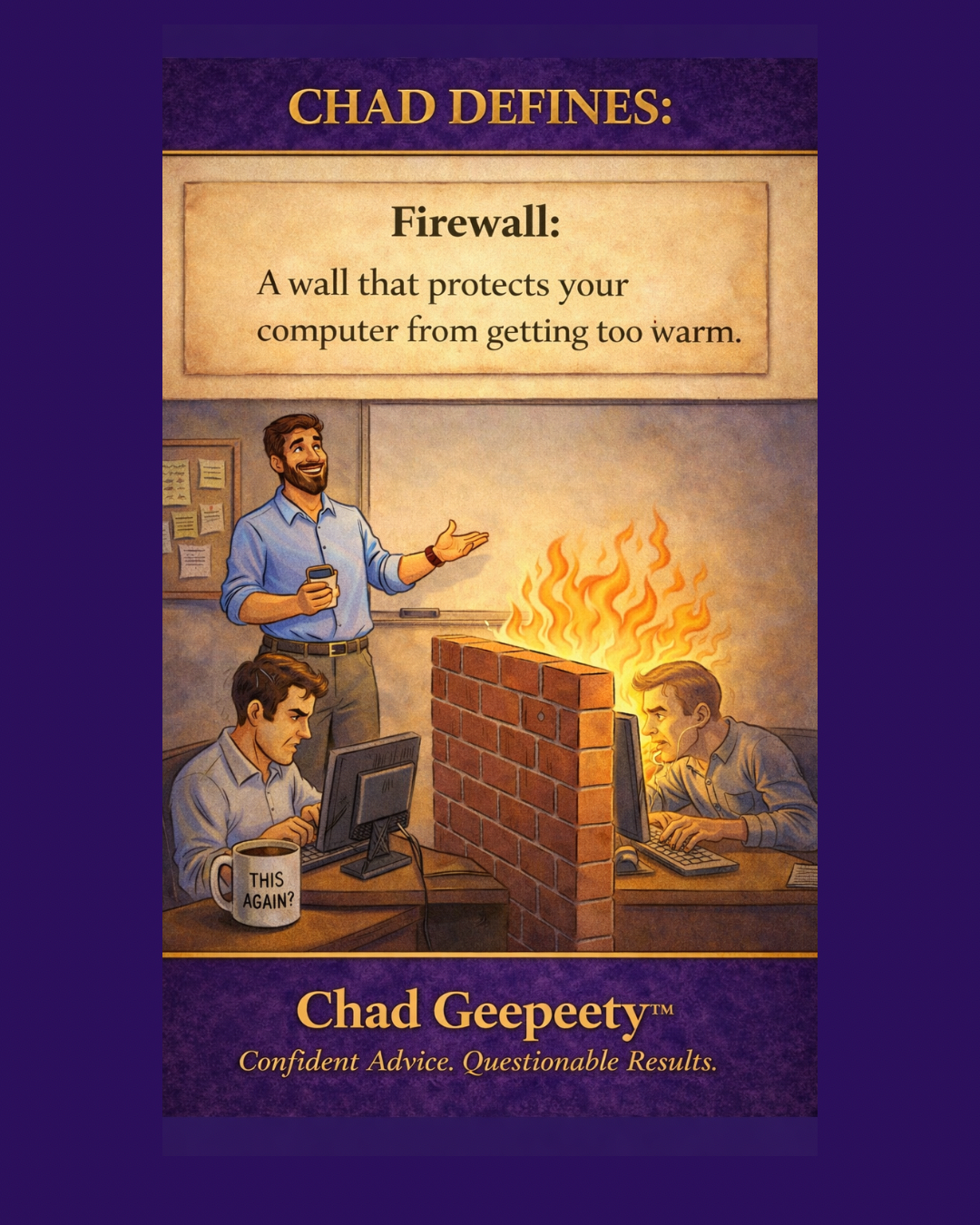
A firewall is supposed to protect your system from threats—while occasionally locking you out for your own safety.
In theory, firewalls monitor traffic, block suspicious activity, and keep your devices secure from the chaos of the internet. In practice, they operate like overconfident gatekeepers, deciding what’s allowed based on rules you don’t remember setting. Between apps, updates, and constant connectivity, modern tech depends on layers of invisible protection. The problem is, those same protections sometimes treat you like the problem (see Software Updates Fix Nothing — https://www.chadgeepeety.com/cartoons/software-updates-fix-nothing).
As AI, automation, and smart systems take over more of digital life, security gets more aggressive. Notifications, permissions, and warnings pop up constantly, asking if you trust yourself to proceed. Firewalls, antivirus software, and network controls all work together to keep things safe—but also to make simple actions feel like high-risk decisions. It’s the same logic that makes everything more secure while somehow less usable.
At this point, security isn’t about access—it’s about suspicion.
According to Chad, if your firewall blocks everything, including you, it’s doing its job perfectly (see Turn It Off And On Again — https://www.chadgeepeety.com/cartoons/turn-it-off-and-on-again).
Explore more Chad Geepeety™ cartoons about AI, tech, and the everyday problems that upgrades somehow make worse.