Optimization Makes Failure Happen Faster
Optimization doesn’t fix problems—it just helps them fail more efficiently.
In theory, optimizing systems, apps, and algorithms should make everything faster, smoother, and more reliable. In reality, AI-driven tools, automation, and software updates often just accelerate whatever was already broken. When something goes wrong, it doesn’t happen eventually—it happens immediately, repeatedly, and at scale. That’s the real magic of modern tech: doing the wrong thing faster with more confidence.
We’ve all seen it—smart devices reacting instantly but incorrectly, apps loading quickly only to crash faster, and systems that proudly “improve performance” while making outcomes worse (see Software Updates Fix Nothing). The process looks impressive, the speed feels intentional, and the failure somehow seems like progress.
Because once something is optimized, there’s no delay left to question it. The mistake arrives instantly, fully committed, and impossible to ignore (see Fast Wi-Fi Slow Printer).
Faster isn’t better. It’s just sooner.
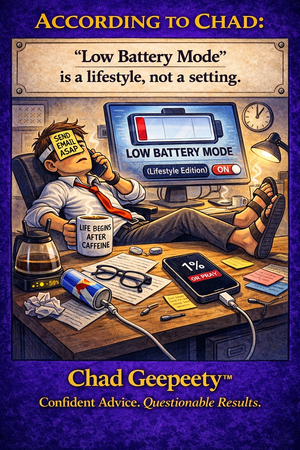
Explore more Chad Geepeety™ cartoons about AI, tech, and the everyday problems that upgrades somehow make worse.