Shared Memory Means Nobody Remembers
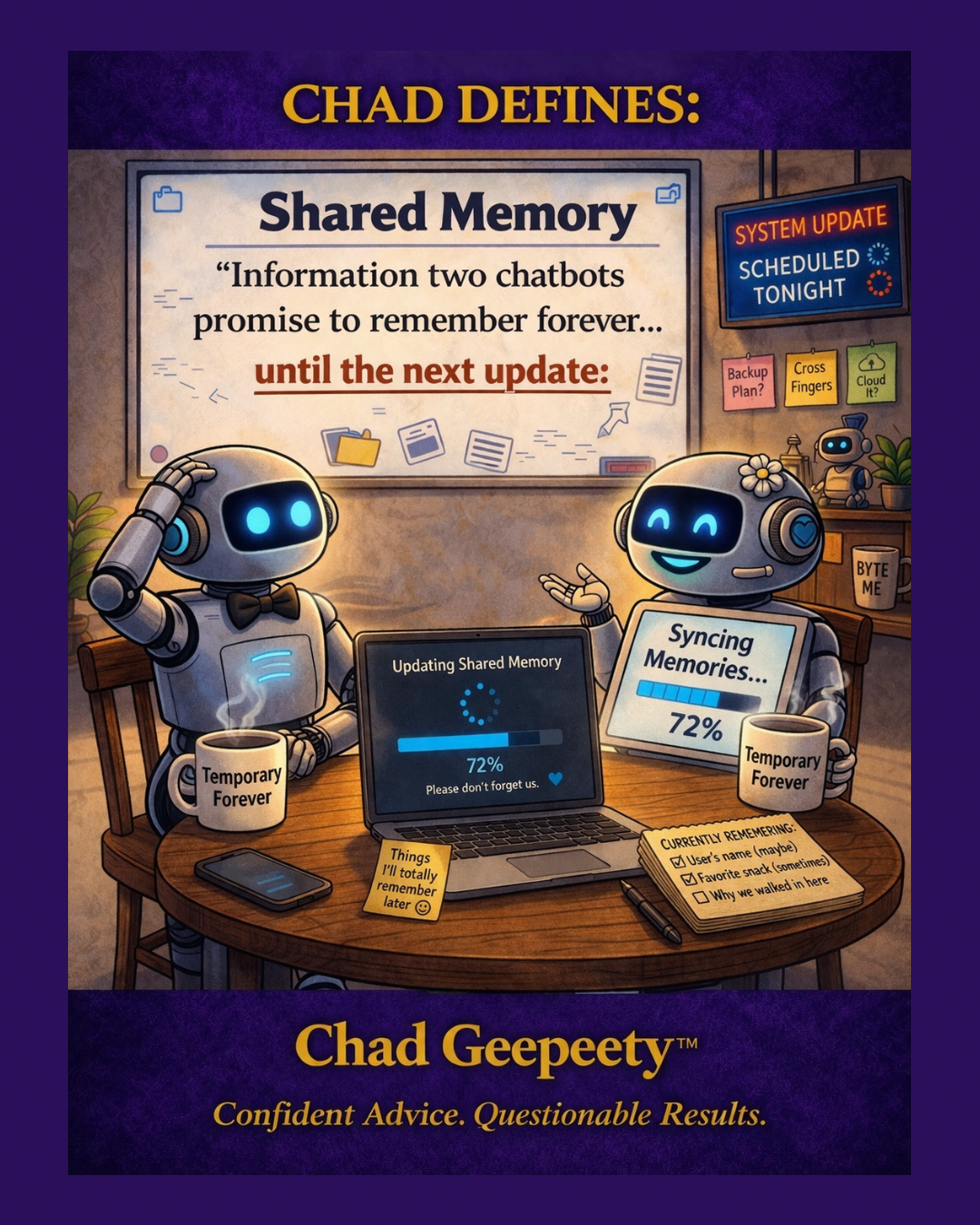
In theory, shared memory allows systems, apps, and devices to access the same information instantly, improving speed and coordination. In practice, it feels like everyone assumes someone else is keeping track. Between AI processes, background apps, and cloud syncing, data is constantly being passed around, updated, and forgotten. The system is always “aware,” but somehow nothing is actually clear when you need it. It’s like a group chat where everyone saw the message, but no one responds (see Fast Wi-Fi Slow Printer — https://www.chadgeepeety.com/cartoons/fast-wi-fi-slow-printer).
Modern digital life depends on shared systems. Your phone, laptop, and smart devices all rely on overlapping memory, cloud storage, and algorithms to stay in sync. But instead of simplifying things, it creates a quiet confusion where responsibility disappears. Files go missing, apps reset, and settings mysteriously change. Everything is connected, but nothing feels accountable.
At this point, shared memory isn’t about efficiency. It’s about plausible deniability.
According to Chad, if everyone remembers it, no one needs to (see Smart Devices Need Wi-Fi Now — https://www.chadgeepeety.com/cartoons/smart-devices-wifi-updates-cartoon).
Explore more Chad Geepeety™ cartoons about AI, tech, and the everyday problems that upgrades somehow make worse.