Terms And Conditions Explained Simply
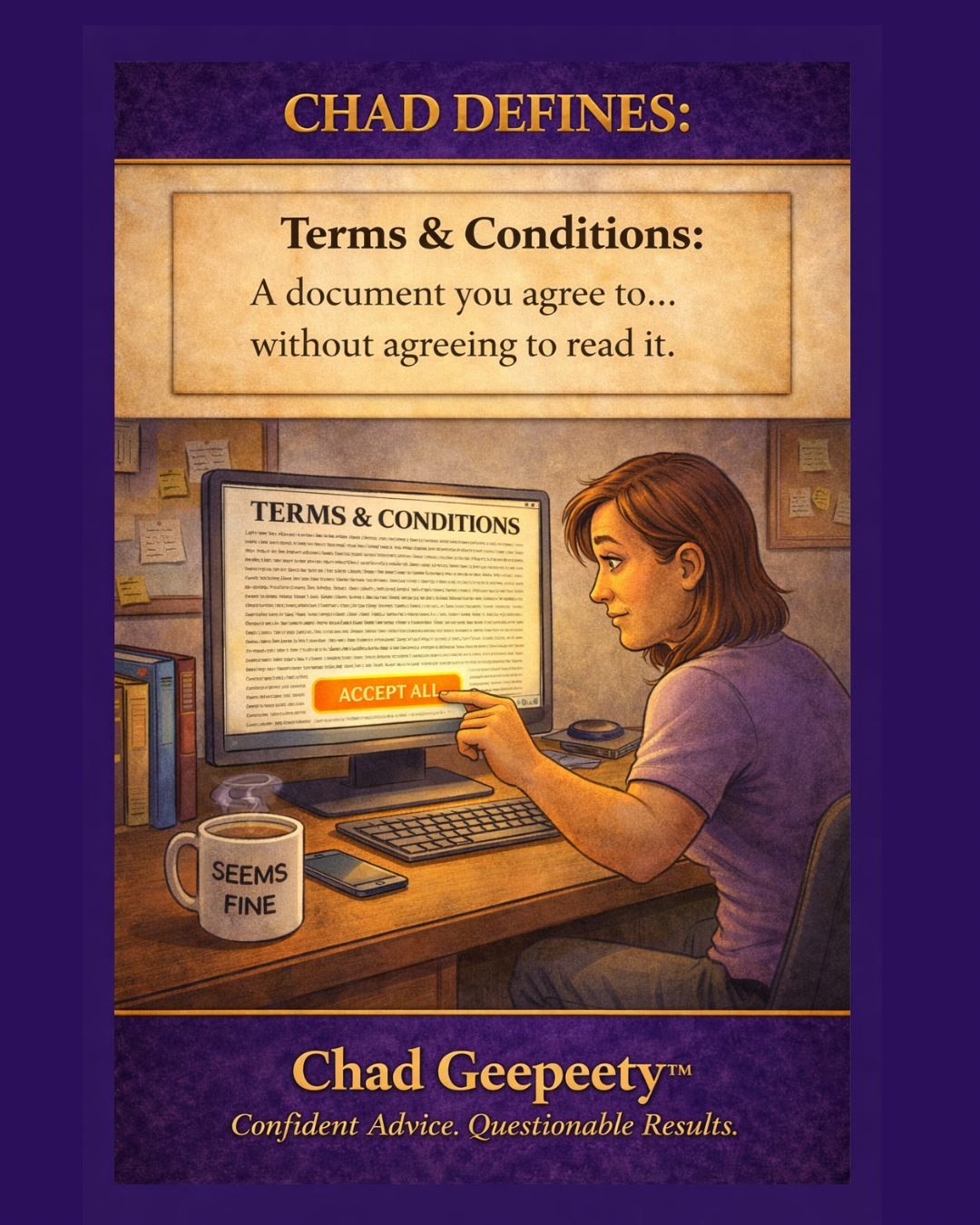
Terms and Conditions: a document you agree to… without agreeing to read it. You scroll just enough to feel responsible, maybe catch a word or two like “privacy” or “cookies,” and then confidently hit “Accept All” like you’ve done your due diligence.
Modern tech runs on agreements nobody reads. Every app, website, and update comes with pages of legal language designed to protect them, not clarify anything for you. And yet, we all pretend it’s part of the process—like we’re carefully reviewing it when we’re really just trying to get to the part where the button lights up.
This cartoon captures that universal moment: staring at a wall of text, knowing full well the outcome is already decided. You’re not reading it. You’re surviving it. The real feature isn’t understanding the terms—it’s getting past them as quickly as possible.
Convenience beats comprehension every time.
If it says “Accept All,” it already knows you will.
Explore more Chad Geepeety™ cartoons about AI, tech, and the everyday problems that upgrades somehow make worse.