What A Router Actually Does
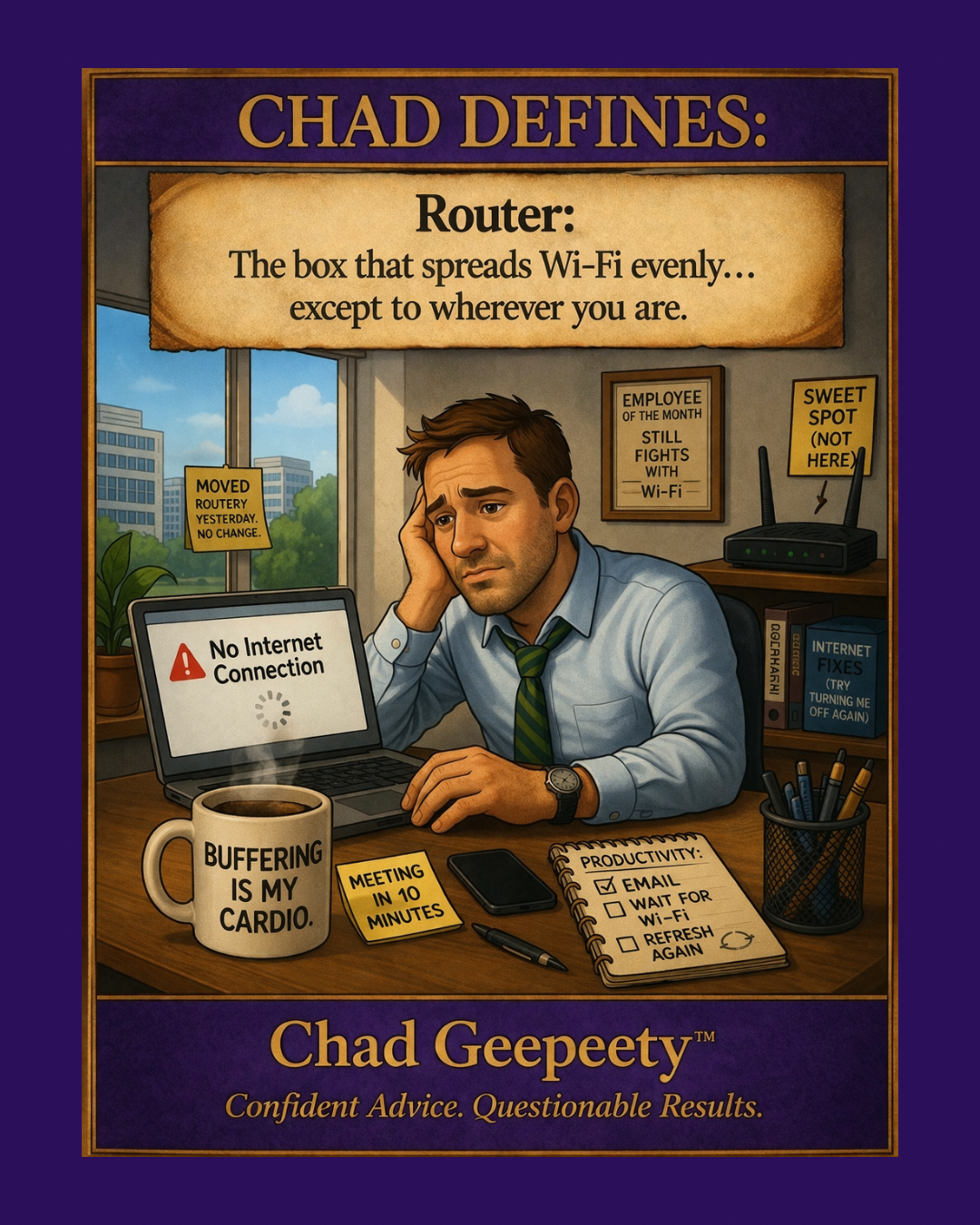
A router is supposed to deliver fast, reliable Wi-Fi everywhere—except exactly where you are.
In theory, routers power modern digital life by connecting devices, managing traffic, and keeping everything online. In practice, they seem to distribute signal strength based on mystery, mood, and wall thickness. Smart devices, apps, and streaming all depend on stable Wi-Fi, yet somehow the one spot you need it most becomes a dead zone. It’s the same confidence you see in tech that works perfectly until you actually need it (see Smart Devices Need Wi-Fi Now — https://www.chadgeepeety.com/cartoons/smart-devices-wifi-updates-cartoon).
Between firmware updates, signal boosters, mesh systems, and endless “improvements,” routers have evolved into something far more complicated than just internet boxes. Now they require apps, passwords, resets, and occasional rituals to function properly. You can test speeds, move antennas, and restart everything, but the result is usually the same: great connection everywhere except the one room you’re in. It’s not a failure—it’s a feature of modern tech expectations.
At this point, Wi-Fi isn’t about coverage—it’s about confidence.
According to Chad, if your router works everywhere else, it’s doing its job. You’re just in the wrong place (see Low Battery Mode Lifestyle — https://www.chadgeepeety.com/cartoons/low-battery-mode-lifestyle).
Explore more Chad Geepeety™ cartoons about AI, tech, and the everyday problems that upgrades somehow make worse.