Typing Bubble Anxiety Explained
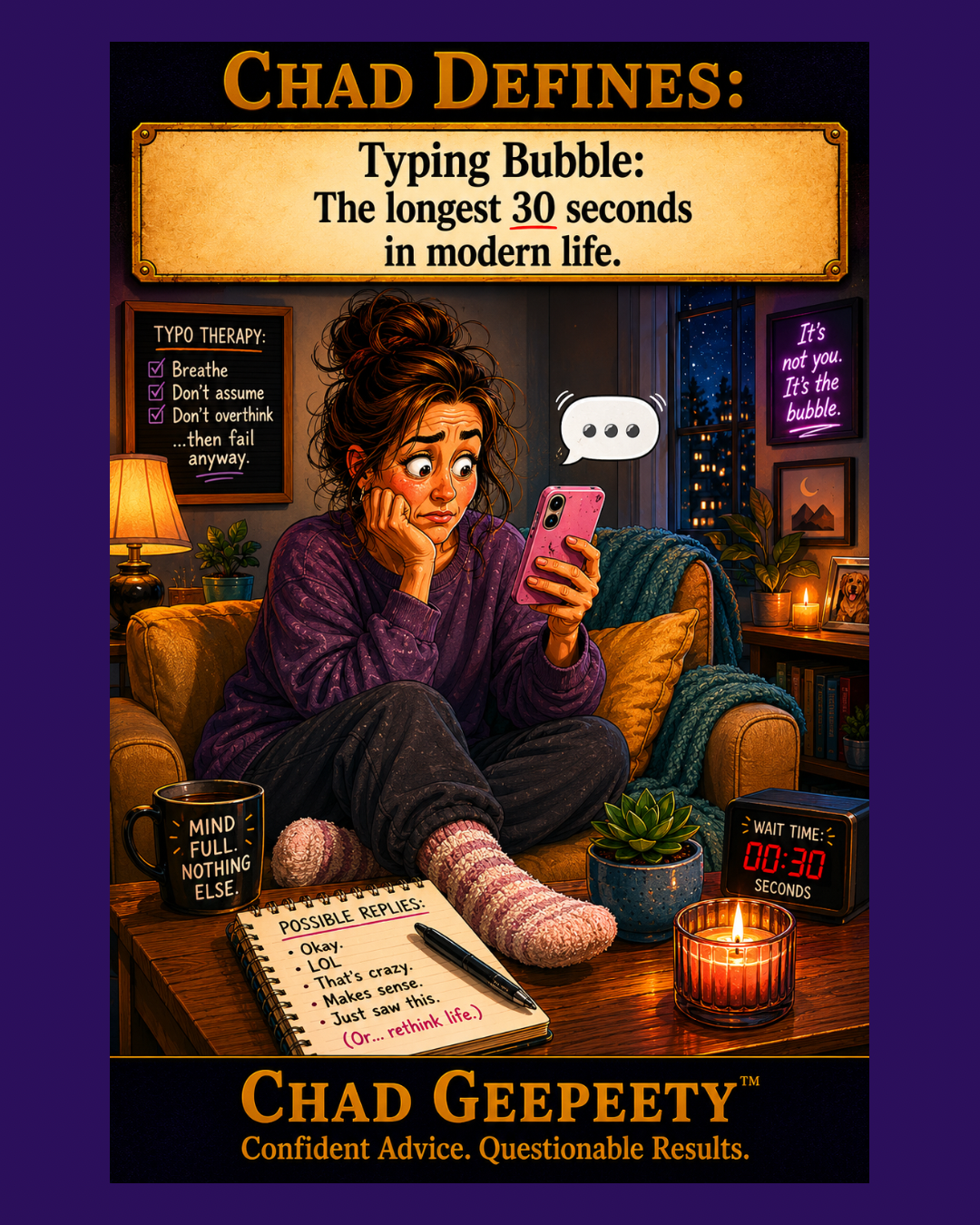
The typing bubble has become modern life’s smallest panic attack. Three little bouncing dots can instantly trigger overthinking, regret, optimism, dread, and at least four imaginary arguments before the reply even arrives. Technology promised faster communication, but somehow apps, notifications, AI suggestions, and smart devices mostly turned texting into emotional cardio. Even worse, the longer the dots bounce, the more your brain starts generating fake scenarios like a broken algorithm running on Wi-Fi and caffeine. Chad Geepeety™ firmly believes the typing bubble should come with a warning label and optional emotional support playlist. Anyone who has stared at a phone for 30 seconds while mentally rewriting their entire personality already understands the problem (see https://www.chadgeepeety.com/cartoons/low-battery-mode-lifestyle). Modern digital life keeps inventing tiny new ways to create stress from absolutely nothing, especially when the reply eventually turns out to be “lol.” The same technology that can power automation, AI assistants, and streaming services still can’t tell us whether someone is upset or just typing slowly (see https://www.chadgeepeety.com/cartoons/software-updates-fix-nothing). Sometimes the dots disappear because they stopped typing. Sometimes because they stopped believing in you.
Explore more Chad Geepeety™ cartoons about AI, tech, and the everyday problems that upgrades somehow make worse.